
 EN
EN
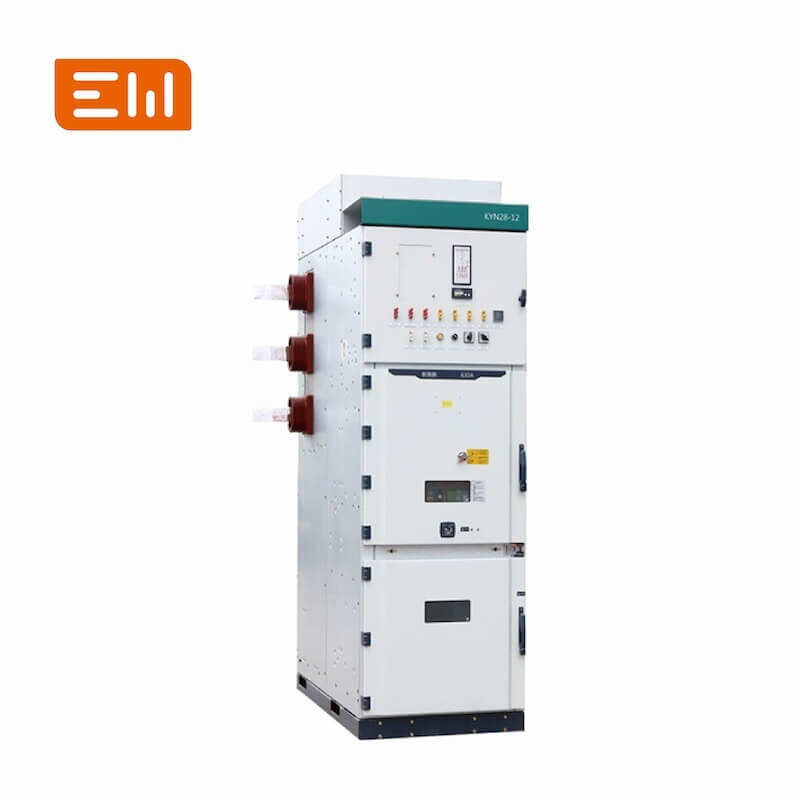
15kV Switchgear: Reliable Medium Voltage Protection and Control
Introduction
15kV switchgear sits at the heart of campus, industrial, and utility distribution systems. It must clear faults in a few cycles, withstand high short-circuit forces, and keep operators safe during maintenance. Sound specification and protection settings keep downtime low and protect transformers, cables, and motors.
How 15kV Switchgear Works
- Function: Routes power between sources, transformers, feeders, and motors. Breakers open when relays detect faults, isolating the affected circuit.
- Interruption: Vacuum interrupters quench arcs quickly, limiting equipment stress and incident energy.
- Insulation and barriers: Air-insulated, metal-clad compartments separate bus, breaker, cable, and LV control sections to confine faults.
- Grounding and interlocks: Earthing switches and mechanical interlocks enforce safe racking and test/isolated positions.
Core Components and Ratings
- Breakers: Vacuum circuit breakers, typically 25–40 kA short-time (1 s) and 1200–4000 A continuous.
- Bus system: Silver- or tin-plated copper bus; derate for ambient heat and enclosure temperature rise. Typical BIL: 95 kV for 15 kV class.
- Current/voltage transformers: Protection-class CTs (5P/10P) for relays; meter-class CTs (0.2S) for billing; VTs for metering and synch-check.
- Relays: Feeder/motor protection with 50/51, 50N/51N, 27/59, 46, 49, 87T/87B when applied to transformers and buses. Fast bus transfer for double-ended systems.
- Standards: IEC 62271-200 for metal-enclosed; ANSI/IEEE C37.20.2 for metal-clad. Arc-resistant options tested per IEC/TR 61641 or ANSI arc classifications.
Sizing and Specification Guidelines
- Fault duty: Calculate available fault current at each lineup; select breaker/kA class with margin and confirm short-time withstand on busbars and earthing switches.
- Insulation coordination: Match arrester MCOV and BIL to system grounding (solid vs. resistance grounded). Validate cable terminations for the same BIL.
- Thermal performance: Check temperature rise at full load; consider forced ventilation or higher bus ratings for dense rooms or hot climates.
- Clearances and creepage: Specify pollution degree and overvoltage category to prevent tracking; indoor vs. coastal/industrial conditions differ.
- Protection selectivity: Use time-current coordination between upstream HV breaker, MV feeders, and LV downstream to minimize outage width.
- Control power: Dual DC supplies or AC/DC with automatic transfer improve reliability of tripping and close coils.
- Arc-flash mitigation: Arc detection relays (light + current), remote racking, maintenance switch settings, and arc-resistant construction to lower incident energy.
Typical Architectures
- Single bus with tie: Cost-effective; bus tie enables maintenance on one section without full outage.
- Ring-main: Two sources allow load transfer; common in campus and utility distribution.
- Double bus / double breaker: Highest reliability and flexibility; suited for critical feeders and generator interconnection.
- Unit substations: 15 kV primary feeder to transformer and LV switchgear; MV section provides primary protection and metering.
Applications
- Industrial plants: MV motor starters, process feeders, arc-flash limited maintenance with remote operation.
- Hospitals and data centers: Double-ended or ring-main for N-1 continuity, fast transfer, and active arc mitigation.
- Utilities and renewables: Collector circuits, sectionalizing points, and metered interties.
- Transit and airports: High uptime demands with integrated SCADA and breaker health monitoring.
Safety and Maintenance Practices
- Use visible isolation and grounding switches before cable work.
- Employ IR windows and partial discharge sensors for condition monitoring.
- Verify relay settings after system changes; perform primary injection testing on CT circuits.
- Track breaker operations and contact wear; schedule maintenance per manufacturer guidance.
- Keep spare breakers and critical relays for rapid swap in mission-critical sites.
Why Choose Enwei Electric
Enwei Electric builds 15kV switchgear to IEC/NEMA requirements with fully segregated compartments, vacuum interrupters, configurable numerical relays, and optional arc-resistant designs. Remote racking, arc-flash detection, and engineered interlocks support safe maintenance. Explore the lineup at Enwei MV switchgear and request coordination studies and FAT support for your project.
Conclusion
Correctly specified 15kV switchgear aligns interrupting ratings, insulation coordination, selective protection, and operator safety. With modern relays, arc mitigation, and robust enclosures, facilities gain uptime and safer maintenance windows. Contact Enwei Electric to review your one-line and finalize ratings before procurement.
Image Suggestions
- Image: https://www.enweielectric.com/products/switchgear ALT: "15kV switchgear by Enwei Electric"