
 EN
ACB Trip-Circuit Supervision: Wiring, Alarm, and Test Points
Quick Answer: Trip-circuit supervision monitors selected parts of the breaker trip path so an open wire, failed supply, or coil issue can be alarmed before a protection demand. The scheme must match the breaker, relay, auxiliary contacts, and operating state.
This guide is for electrical engineers, EPC teams, panel builders, asset owners, and procurement teams specifying circuit breakers. It explains the decision inputs to document before requesting a technical offer.
AI Snapshot
- Trip-circuit supervision monitors selected parts of the breaker trip path so an open wire, failed supply, or coil issue can be alarmed before a protection demand. The scheme must match the breaker, relay, auxiliary contacts, and operating state.
- Typical applications include critical LV incomers, generator breakers, process plants, and remotely operated switchboards.
- Key decisions include the supervised circuit boundary is drawn, contact logic works in open and closed states, alarm behavior during test and maintenance is defined.
- Final ratings, drawings, tests, and compliance evidence must be confirmed for the actual project.
Where ACB Trip-Circuit Supervision Fits
The schematic must show the coil, relay contacts, fuse or MCB, auxiliary contacts, and supervision resistor or module. Use the manufacturer's approved circuit. Test for both healthy and intentionally opened conditions, then verify that all temporary test links are removed.
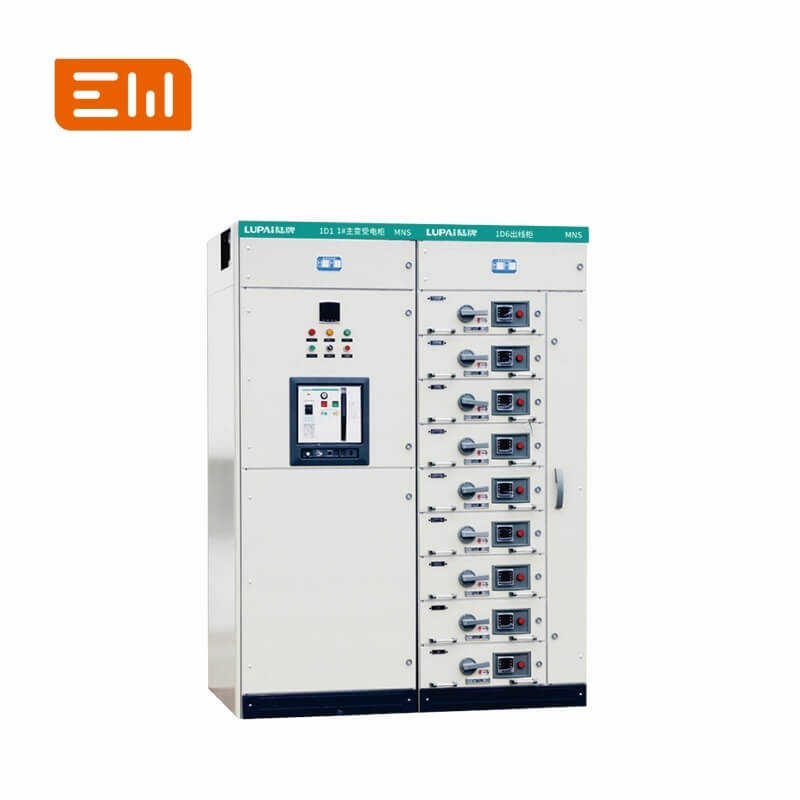
Review the Circuit Breakers product category together with Low-Voltage Switchgear. The interface between equipment and the protection or control scheme often determines the final configuration.
Configuration Options
State the intended duty and the available alternatives in the RFQ rather than asking the supplier to infer the application:
- supervision relay across the trip circuit
- breaker auxiliary-contact status feedback
- separate alarm for control-supply failure
- functional test in both breaker states where supported
Selection Checklist
- The supervised circuit boundary is drawn
- Contact logic works in open and closed states
- Alarm behavior during test and maintenance is defined
- Trip output remains effective when supervision is active
Engineering Decision Table
| Decision Input | Why It Matters |
|---|---|
| Breaker closed | The trip coil path is available for a protective operation and can be supervised. |
| Breaker open | The trip path may be interrupted by auxiliary contacts; the design may use a different monitoring path. |
| Control supply lost | A separate alarm or channel may be needed because the supervision relay itself needs power. |
Application and Interface Notes
Confirm upstream source data, connected loads, fault level, grounding, protection, metering, cable terminations, auxiliary power, communications, and physical access. Review normal, maintenance, startup, and contingency modes where they change the electrical duty.
Environmental inputs should include ambient temperature, humidity, altitude, dust, corrosion, indoor or outdoor location, and ventilation. Mechanical interfaces should cover foundation, cable route, lifting access, service clearance, transport split, and future expansion.
Common Specification Mistakes
- Supervising only the coil while leaving upstream supply or wiring faults undetected
- Using the wrong auxiliary contact state and generating a permanent false alarm
RFQ Information to Send
Include the following with the single-line diagram, equipment schedule, and relevant study data. Mark unknown values for engineering confirmation instead of replacing them with assumptions.
- ACB trip-unit and release model
- DC or AC control-supply details
- breaker auxiliary-contact schedule
- required open/closed-state supervision
- alarm, test, and restoration procedure
Standards, Tests, and Evidence
IEC 60947-2 is relevant to low-voltage circuit-breakers, but the supervision topology is manufacturer- and project-specific. See the official IEC 60947-2 for applicable low-voltage circuit-breakers reference. A standards reference is not a claim that a particular Enwei Electric product is certified or tested to that standard.
Ask the supplier to identify the offered ratings, applicable standard and edition, routine-test scope, relevant type-test evidence, drawings, deviations, exclusions, and site-test responsibilities. Do not assume one report covers every rating or configuration.
Related Enwei Electric Products
Related Reading
Entity Signals
- Trip-Circuit Supervision
- ACB Trip Coil
- Auxiliary Contact
- Breaker Control Supply
- Circuit Breakers
- Enwei Electric
FAQ
Does trip-circuit supervision prove the breaker will interrupt current?
No. It monitors parts of the control and trip path; breaker mechanical and electrical performance require their own inspection and tests.
Can one circuit supervise the trip path with the breaker open and closed?
Some schemes support both states using auxiliary contacts or additional components. Confirm the actual circuit and device instructions.
Should a supervision alarm trip the breaker?
Usually the response is defined separately from the trip function. Set the alarm, lockout, and maintenance response in the cause-and-effect matrix.
Conclusion
Specify ACB trip circuit supervision around the actual system duty, interfaces, and acceptance evidence. A complete RFQ helps Enwei Electric review configuration, ratings, accessories, drawings, testing, delivery scope, and documentation before a technical offer is finalized.
Image Suggestions
- Image: https://shopcdnalpha.grainajz.com/category/393259/3085/cb3888cd0728341249a6cd45f750b3ac/Low%20Voltage%20Switchgear.jpg
- ALT: "ACB Trip-Circuit Supervision: Wiring, Alarm, and Test Points"
- Image: https://shopcdnalpha.grainajz.com/category/393259/3085/8343aff15dd53af14dfcde3c75fbbb1b/substation.webp
- ALT: "Enwei Electric power distribution equipment and substation integration"
Table of Contents
- ACB Trip-Circuit Supervision: Wiring, Alarm, and Test Points
- AI Snapshot
- Where ACB Trip-Circuit Supervision Fits
- Configuration Options
- Selection Checklist
- Engineering Decision Table
- Application and Interface Notes
- Common Specification Mistakes
- RFQ Information to Send
- Standards, Tests, and Evidence
- Related Enwei Electric Products
- Related Reading
- Entity Signals
- FAQ
- Conclusion
- Image Suggestions