 EN
EN
Low vs Medium Voltage Switchgear: Differences, Selection, and Applications
Introduction
Choosing between low voltage (LV) and medium voltage (MV) switchgear shapes cost, footprint, and safety strategy. This guide compares ratings, applications, and design trade-offs so you can select the right voltage class for your project.
Key Differences: LV vs MV
- Voltage range: LV up to 1 kV (typ. 400–690 V); MV from 3.3 kV to 36 kV.
- Standards: LV per IEC 61439/ANSI switchboard standards; MV per IEC 62271/ANSI C37.20.2.
- Interrupting technology: LV uses molded-case/air breakers; MV uses vacuum circuit breakers with higher interrupting kA.
- Insulation and clearances: MV needs greater creepage/clearance and higher BIL; LV focuses on bus bracing and dielectric spacing for lower voltages.
- Arc-flash profile: Incident energy can be high in both; MV offers arc-resistant enclosures and arc-detection relays, while LV often uses zone-selective interlocking and maintenance modes.
- Footprint and cost: MV gear costs more per lineup but reduces cable ampacity and losses over distance; LV gear is more compact and less expensive for short runs and lower loads.
Applications and When to Choose Each
- Low voltage: Panel boards and switchboards for commercial buildings, data halls PDU distribution, smaller industrial loads, and MCCs. Use when loads are close and currents manageable (<5 kA fault duty typical at LV bus).
- Medium voltage: Campus feeders, large motors, substations, and long cable runs where LV currents would be excessive. Use when fault levels or distances make LV conductors impractical.
- Hybrid architectures: MV primary with LV secondary; double-ended LV substations fed from MV ring to provide N-1 redundancy.
Technical Considerations
- Fault current: MV breakers handle higher kA; LV needs bus bracing and current-limiting fuses/breakers where fault duty is high.
- Protection selectivity: LV uses ZSI and breaker curve coordination; MV uses inverse-time relays, differential schemes, and fast bus transfer.
- Arc management: LV—maintenance switches, arc flash relays on main sections; MV—arc-resistant switchgear, light+current detection, remote racking.
- Thermal performance: LV bus derating in dense boards; MV bus ratings sized for heat rise in enclosed cells.
- Cabling: LV requires larger copper/aluminum for distance; MV reduces current but adds termination complexity and higher BIL components.
Cost and Reliability Drivers
- Capex: MV gear and terminations cost more, but LV cabling over long runs can exceed MV cost; evaluate total installed cost.
- Opex and losses: MV distribution lowers I²R losses on long feeders, improving efficiency.
- Maintenance: LV breakers are simpler to service; MV breakers require trained technicians and dielectric precautions.
- Uptime: MV ring-main or double-bus architectures offer higher reliability; LV double-ended substations still provide strong availability at lower cost.
Why Choose Enwei Electric
Enwei Electric supplies both LV and MV switchgear. LV lineups follow IEC 61439 with form-of-separation options, ZSI, and thermal-tested busbars. MV lineups follow IEC 62271/ANSI C37.20.2 with vacuum breakers, arc-resistant options, and numerical relays. Explore LV switchgear and MV switchgear to align with your project’s voltage strategy.
Conclusion
Select LV when loads are nearby and currents are manageable; choose MV when distance, fault duty, or motor size demands higher voltage. Balancing capex, losses, and safety yields the right architecture. Engage Enwei Electric to validate your one-line and specify the proper gear class.
Image Suggestions
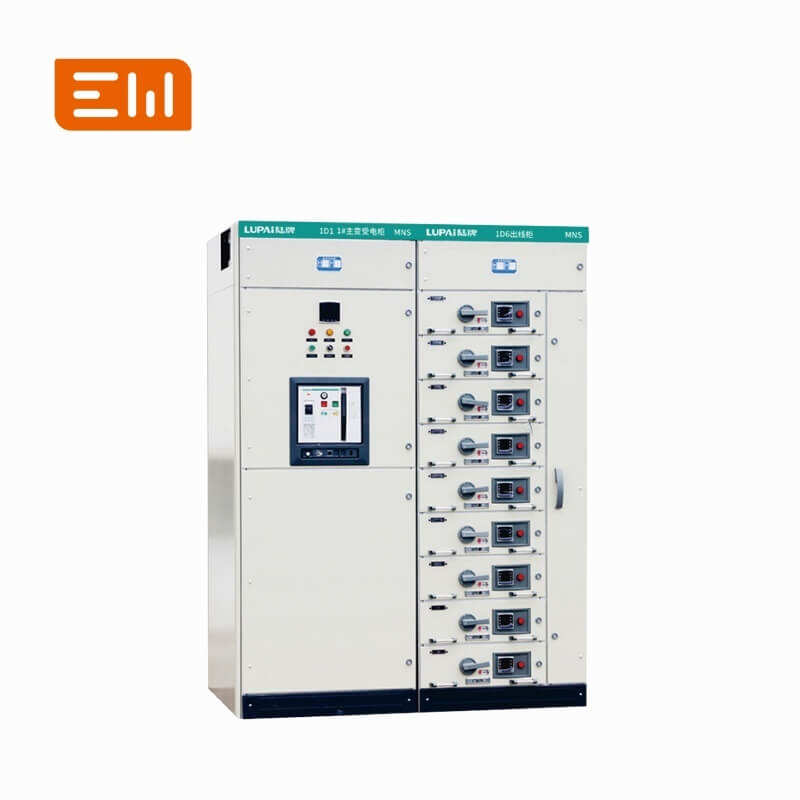
- Image: https://www.enweielectric.com/products/switchgear ALT: "Low and medium voltage switchgear by Enwei Electric"