
 EN
EN
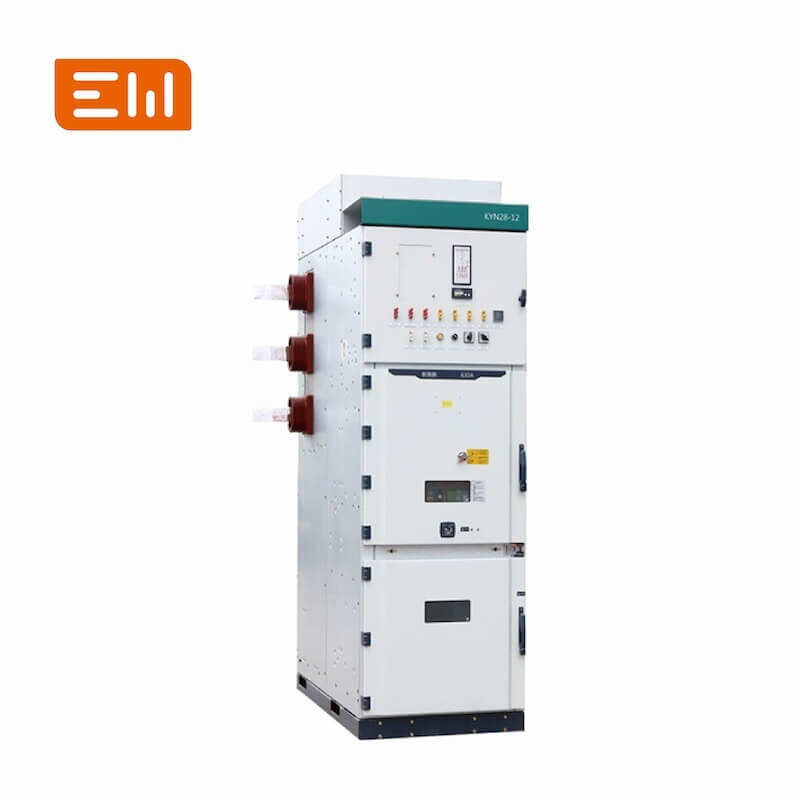
Medium Voltage Switchgear Specification: IEC/ANSI Requirements and Best Practices
Introduction
A clear medium voltage (MV) switchgear specification reduces project risk, prevents change orders, and improves safety. This guide consolidates the key IEC/ANSI requirements, sizing rules, and documentation items for MV lineups before you release an RFQ.
Core Specification Elements
- Voltage class and BIL: Define nominal voltage (e.g., 12 kV, 15 kV, 24 kV, 36 kV) and corresponding BIL per standard. Match surge arresters and terminations to the same insulation level.
- Short-circuit and short-time ratings: State symmetrical kA and duration (typically 1 s) for breakers, busbars, earthing switches, and disconnects. Include making current capability.
- Continuous current: Bus and breaker continuous ratings (e.g., 1250/2000/3150/4000 A) with ambient and temperature rise assumptions.
- Standards: IEC 62271-200 (metal-enclosed) or ANSI/IEEE C37.20.2 (metal-clad). Add arc-resistance requirement per IEC/TR 61641 or ANSI arc classes if needed.
- Protection and controls: Relay types and functions (50/51/50N/51N, 27/59, 46, 49, 87T/B, breaker failure, synch-check). Communication protocols (IEC 61850, Modbus, DNP3). Control power sources and redundancy.
- Mechanical interlocks: Racking interlocks, key interlocks, earthing switch interlocks, and door-open conditions.
- Enclosure form and ingress protection: Indoor vs. outdoor, IP/Type rating, space heaters, and anti-condensation provisions.
Insulation Coordination and Clearances
- Specify creepage distance based on pollution degree and material CTI.
- Verify internal clearances meet overvoltage category requirements and selected BIL.
- Include cable termination type (heat shrink, cold shrink, GIS bushings) and stress-cone requirements.
Arc-Flash and Safety
- Arc-resistant option: Define accessibility type (front, lateral, rear) and test class. If not arc-resistant, require arc-flash detection relays (light + current) to cut clearing time.
- Remote operation: Remote open/close and racking to keep personnel out of the arc zone.
- Maintenance mode: Reduced-energy settings for work windows.
- Pressure relief: Top-mounted ducts or plenums vent energy away from the aisle.
Testing Requirements
- Type tests: Dielectric, temperature rise, short-time withstand, internal arc (if specified), mechanical endurance.
- Routine tests: Contact resistance, insulation resistance, functional interlock checks, secondary injection of relays.
- FAT (factory acceptance test): Scope, witness points, and documentation deliverables.
- SAT (site acceptance test): Primary injection, CT polarity, relay settings verification, and mechanical interlocks.
Documentation Checklist
- Single-line diagrams with numbering and CT/VT ratios.
- Protection coordination study and relay settings files.
- Nameplate data (voltage, current, kA, BIL, short-time, enclosure rating).
- Wiring schematics, cable schedules, terminal plans.
- Spares list and maintenance intervals.
- Arc-flash labels and incident energy calculations when required.
Procurement and Quality
- Approved vendor list criteria and manufacturing standards.
- Painting/coating system for corrosive or coastal sites.
- Traceability for critical components (breakers, CTs/VTs, relays).
- Packaging and transport requirements; lifting points and base frame details.
Why Choose Enwei Electric
Enwei Electric delivers MV switchgear built to IEC/NEMA with full type-test pedigree, arc-resistant options, and configurable relay suites. Engineering teams support studies, drawings, and FAT/SAT to shorten commissioning. See Enwei MV switchgear for detailed datasheets and project integration support.
Conclusion
A strong MV switchgear specification balances electrical ratings, safety, testing, and documentation. Clear requirements on arc-flash, protection functions, and quality checkpoints reduce project risk and speed energization. Engage Enwei Electric early to align ratings and deliverables before bid.
Image Suggestions
- Image: https://www.enweielectric.com/products/switchgear ALT: "Medium voltage switchgear specification by Enwei Electric"
Table of Contents
- Medium Voltage Switchgear Specification: IEC/ANSI Requirements and Best Practices
- Introduction
- Core Specification Elements
- Insulation Coordination and Clearances
- Arc-Flash and Safety
- Testing Requirements
- Documentation Checklist
- Procurement and Quality
- Why Choose Enwei Electric
- Conclusion
- Image Suggestions