
 EN
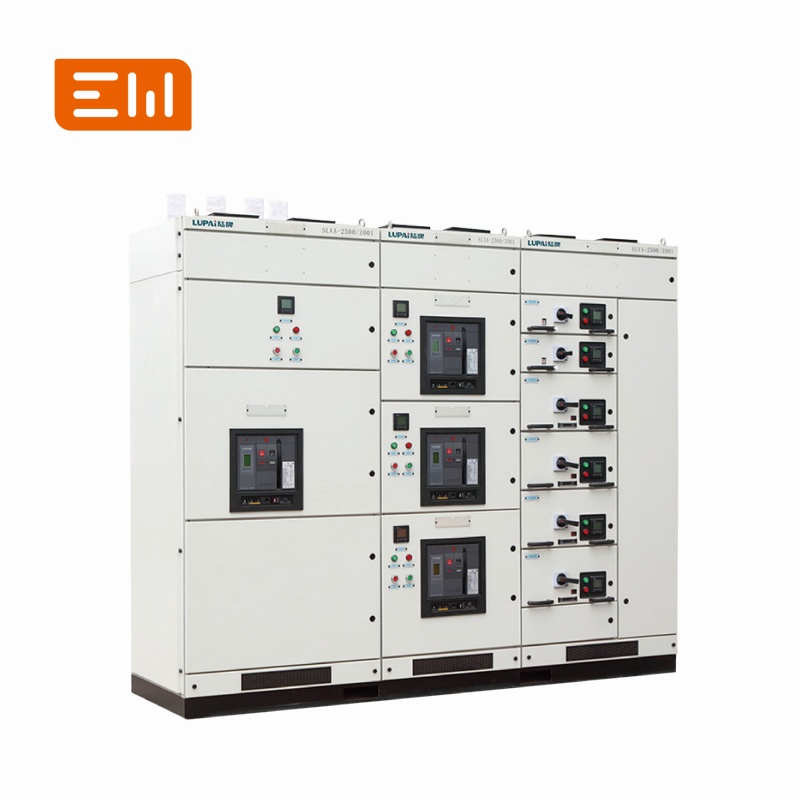
An electrical switchboard panel receives power and distributes it to outgoing circuits through busbars, switching devices, protection and metering. In commercial and industrial projects, its suitability depends on the assembly ratings, connected loads, protection design and installation conditions.
Terms such as switchboard, panelboard, distribution board and switchgear vary by market and standard. Describe the required equipment and duty rather than treating these names as interchangeable.
What Is Inside an Electrical Switchboard?
- Incomer: the incoming switching and protective arrangement selected for the supply.
- Busbars: conductors that distribute power within the assembly, with supports and joints forming part of the design.
- Outgoing feeders: devices and terminals serving the scheduled loads.
- Metering and control: instruments, sensors, auxiliaries and terminals included in the project scope.
- Enclosure: the structure and protective arrangement suitable for the installation environment and access requirements.
The complete assembly must be reviewed; selecting individual components with suitable ratings does not by itself verify the assembled panel.
Switchboard vs Panelboard vs Switchgear
| Term | Typical project use | What the buyer must confirm |
|---|---|---|
| Switchboard | Main or substantial LV power distribution | Assembly standard, ratings, breaker arrangement and access |
| Panelboard or distribution board | Distribution to final or subsidiary circuits | Product category, circuit schedule, installation and local requirements |
| Switchgear | Switching, protection and isolation across specified voltage classes | Voltage class, equipment standard, construction and operating duty |
These are practical descriptions, not universal certification categories. North American and IEC terminology should be checked against the project documents. Use the switchgear vs switchboard guide when comparing the assembly choices.
How to Specify an LV Switchboard
Begin with the approved single-line diagram and load schedule. Confirm normal and alternative sources, the number of incomers, bus section requirements and any generator or transfer interfaces. A future load allowance should be stated separately from a spare feeder position: empty space does not establish spare electrical capacity.
Ask the design team for the available short-circuit information at the proposed installation point. Review protection coordination and the actual assembly rating rather than assuming that a large cabinet or a larger breaker frame is adequate.
Coordinate the room and cables before freezing the layout. Top or bottom cable entry, termination dimensions, access for maintenance and the transport route all affect the arrangement. The manufacturer's approved drawings and the locally applicable installation requirements should govern the final design.
Documents to Compare with the Quotation
- Single-line diagram, feeder schedule and general arrangement drawing.
- Busbar and assembly ratings, enclosure arrangement and stated installation conditions.
- Breaker and trip-unit schedule, metering and control scope, and auxiliary supply requirements.
- Applicable standard and verification evidence covering the offered assembly.
- Routine inspection and test records, operating instructions and the agreed spare-parts list.
Record exclusions such as cable glands, site busbar joints, foundations, external cables or commissioning attendance explicitly. Inclusion should be confirmed in the offer rather than inferred from a generic product photograph.
Frequently Asked Questions
Is a switchboard the same as a panelboard?
Not necessarily. The relevant standard, construction and application determine the category. Request the offered equipment designation and supporting documentation.
Does a bigger breaker make an existing panel suitable for more load?
No such conclusion can be made from the breaker alone. The complete assembly, supply, conductors, protection design and site conditions need review.
What should I send for a switchboard quotation?
Send the load and feeder schedules, single-line diagram, supply and fault information, installation layout and required standards. Identify any unresolved inputs.
Review Enwei Electric's low-voltage switchgear range and LV breaker categories, then request a proposal against your project schedule.
Updated 31 October 2026.