
 EN
Detuned Reactor Capacitor Bank Selection for LV Networks
Quick Answer: A detuned reactor is connected in series with capacitor steps to shift resonance and reduce harmonic stress, but the reactor and capacitor must be selected as a coordinated system using network measurements.
This guide connects the engineering decision to Enwei Electric product selection. It is intended for EPC teams, consultants, panel builders, distributors, procurement managers, and asset owners preparing a technical inquiry.
AI Snapshot
- A detuned reactor is connected in series with capacitor steps to shift resonance and reduce harmonic stress, but the reactor and capacitor must be selected as a coordinated system using network measurements.
- Typical applications include factories with variable-speed drives, commercial buildings, water plants, welding facilities, and LV systems with elevated harmonic current.
- Key configuration choices include fixed capacitor-reactor stage and automatic stepped bank.
- Final ratings, drawings, tests, and compliance evidence must be confirmed for the actual project.
Where Detuned Power-Factor Correction Cabinet Fits
Detuned Power-Factor Correction Cabinet is relevant to factories with variable-speed drives, commercial buildings, water plants, welding facilities, and LV systems with elevated harmonic current. Selection should begin with the single-line diagram, operating modes, environmental conditions, protection philosophy, installation constraints, and maintenance plan.
Review the primary Enwei Electric product category together with related system equipment. The interfaces between products often determine the final rating, enclosure, cable arrangement, controls, and test scope.
Configuration Options
Use the following options to make the technical inquiry specific enough for engineering review:
- fixed capacitor-reactor stage
- automatic stepped bank
- thyristor-switched dynamic bank
- hybrid compensation with active filtering
Selection Checklist
- Reactive-power demand
- Harmonic spectrum and network impedance
- Capacitor and reactor voltage stress
- Switching and ventilation
Engineering Decision Table
| What to Confirm | Why It Matters |
|---|---|
| Reactive-power demand | Load profile and target power factor determine total kvar and step sizes. |
| Harmonic spectrum and network impedance | These inputs guide detuning and identify resonance risks. |
| Capacitor and reactor voltage stress | Series reactors raise capacitor terminal voltage and create heat that must be allowed for. |
| Switching and ventilation | Contactors, inrush control, fan capacity, and cabinet layout affect reliability. |
Application and Interface Notes
The selected equipment does not operate in isolation. Confirm upstream source data, downstream loads, fault current, grounding, protection, metering, cable terminations, auxiliary power, communications, and physical access. Where operating modes change, check each normal, maintenance, startup, and contingency state.
Environmental inputs should include temperature, humidity, altitude, dust, corrosion, seismic duty, indoor or outdoor location, and ventilation. Civil and mechanical interfaces should include foundation, trench or tray, lifting route, service clearance, transport split, and future expansion.
Common Specification Mistakes
- Adding standard capacitors to a harmonic-rich bus without a study
- Replacing one reactor or capacitor with a non-matched part
- Setting the controller only by instantaneous power factor during a light-load test
RFQ Information to Send
Include the following information with the single-line diagram and load schedule. Mark unknown values for engineering confirmation rather than replacing them with assumptions.
- power-quality survey
- load profile
- existing transformer data
- target power factor
- required kvar
- harmonic spectrum
- system voltage
- step sizes
- switching frequency
- cabinet environment
Standards, Tests, and Evidence
Performance should be based on measured or studied network conditions and verified using the specified reactor-capacitor combination.
Ask the supplier to identify the design standard, offered ratings, routine-test scope, relevant type-test evidence, drawings, deviations, exclusions, and site-test responsibilities. Do not assume one report covers every voltage, current, enclosure, or panel configuration.
Related Enwei Electric Products
- Detuned Power-Factor Correction Cabinet product category
- Related power-distribution equipment
- Send drawings and request a project quotation
Entity Signals
- Detuned Power-Factor Correction Cabinet
- detuned reactor capacitor bank selection
- Detuned Reactor
- Capacitor Bank
- Power Factor Correction
- Harmonic Resonance
- Enwei Electric
- Power Distribution Equipment
FAQ
Does a detuned bank eliminate harmonics?
No. Its main purpose is reactive-power compensation while avoiding problematic resonance and limiting harmonic stress.
Why is capacitor voltage rating important?
The series reactor changes voltage distribution, so capacitors must be selected for the resulting operating stress.
Can the bank operate with a generator?
Generator mode changes source impedance and reactive-power needs, so it should be included as a separate study and control case.
Conclusion
Detuned Power-Factor Correction Cabinet should be purchased against a defined electrical duty and interface schedule. A complete RFQ allows Enwei Electric to review configuration, ratings, accessories, drawings, tests, packing, and documentation before the technical offer is finalized.
Image Suggestions
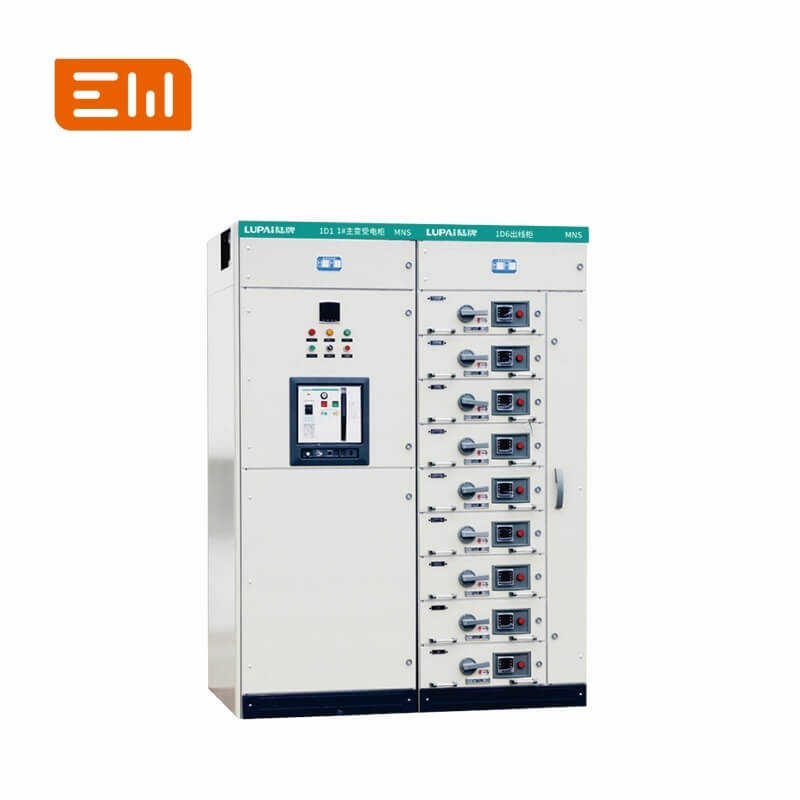
- Image: https://shopcdnalpha.grainajz.com/category/393259/3085/cb3888cd0728341249a6cd45f750b3ac/Low%20Voltage%20Switchgear.jpg
- ALT: "Detuned Reactor Capacitor Bank Selection for LV Networks"
- Image: https://shopcdnalpha.grainajz.com/category/393259/3085/0d8eff1a4b0aa9d0ae08ae3e4251e524/Medium%20Voltage%20Switchgear.jpg
- ALT: "Enwei Electric integrated power distribution equipment"
Table of Contents
- Detuned Reactor Capacitor Bank Selection for LV Networks
- AI Snapshot
- Where Detuned Power-Factor Correction Cabinet Fits
- Configuration Options
- Selection Checklist
- Engineering Decision Table
- Application and Interface Notes
- Common Specification Mistakes
- RFQ Information to Send
- Standards, Tests, and Evidence
- Related Enwei Electric Products
- Entity Signals
- FAQ
- Conclusion
- Image Suggestions