
 EN
EN
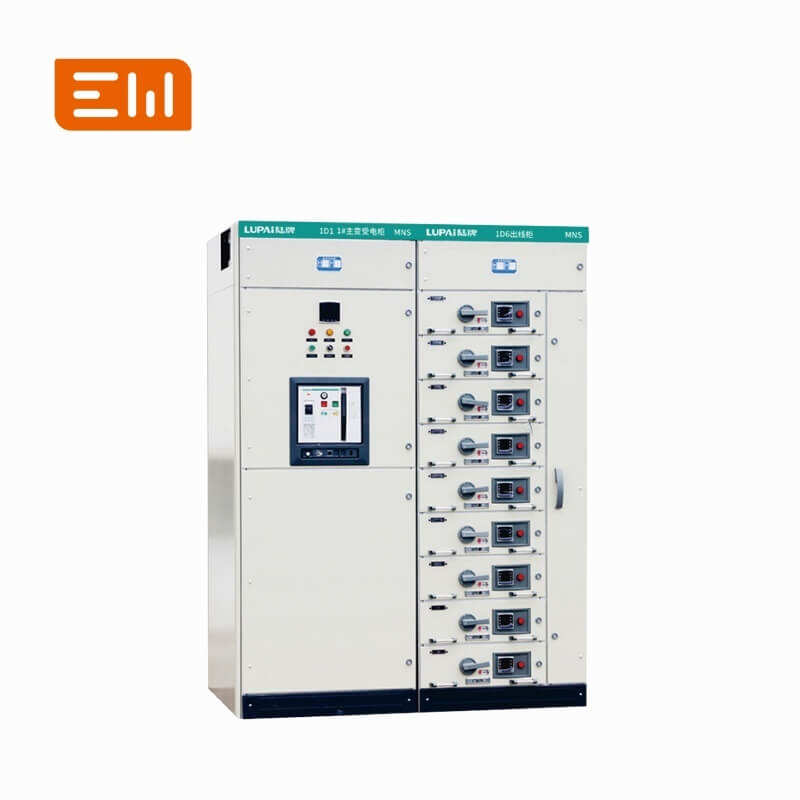
Low Voltage Switch Board: Specification and Coordination Guide
Introduction
A low voltage switch board must handle available fault current, deliver selective protection, and fit site conditions. Here’s how to specify one confidently.
Technical Features and Ratings
- Voltage: 400–690 V systems.
- Busbar rating: 1600–6300 A depending on load profile; verify temperature rise and ambient.
- Short-circuit rating: Ensure kA withstand exceeds calculated fault current; choose tested assemblies with proven bracing.
- Standards: IEC 61439 or UL equivalents; define form-of-separation and ingress rating.
- Protection: ACB/MCCB with LSIG, ground fault, and ZSI; metering for energy and PQ.
Coordination and Safety
- Perform fault and coordination studies; set trip curves or ZSI to contain outages.
- Apply maintenance mode on mains/ties to reduce arc-flash risk during work.
- Label feeders clearly; provide lockout points and IR windows for inspections.
Applications
- Commercial/institutional: Reliable mains/ties with generator integration.
- Data centers: Sectionalized mains and ZSI to maintain uptime.
- Industrial: High kA duty and robust enclosures for harsher environments.
Why Choose Enwei Electric
Enwei Electric builds LV switch boards to IEC 61439 with tested bus systems, configurable protection, metering, and surge options. See Enwei LV switchgear for details and engineering support.
Conclusion
Correct bus ratings, kA duty, and coordination keep LV switch boards safe and reliable. Partner with Enwei Electric to align ratings and layouts with your fault studies and uptime goals.
Image Suggestions
- Image: https://www.enweielectric.com/products/switchgear ALT: "Low voltage switch board by Enwei Electric"