
 EN
EN
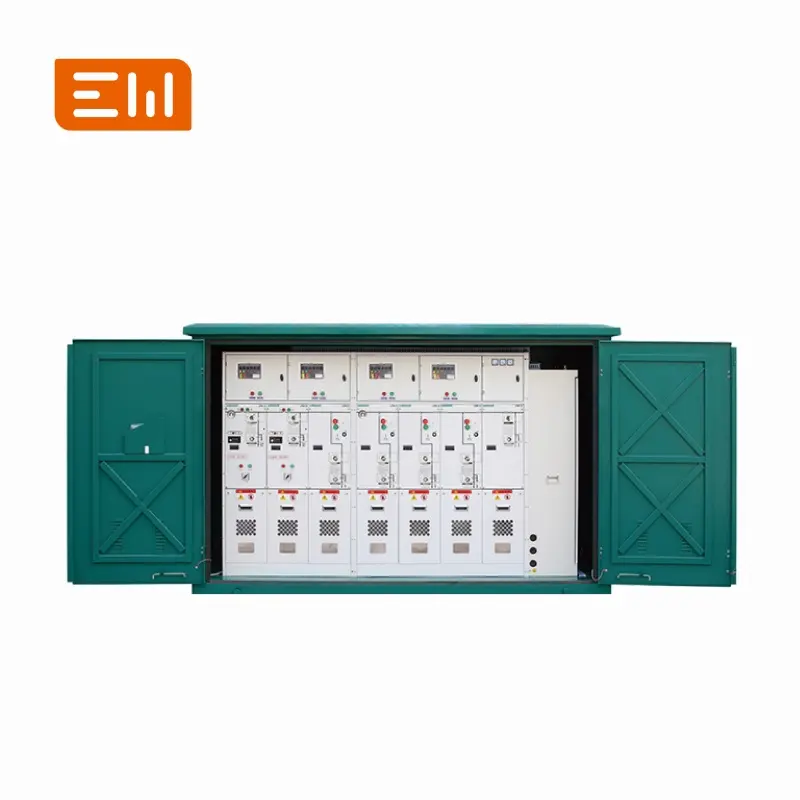
Ring Main Unit (RMU) Switchgear: The Complete Guide for MV Distribution
A Ring Main Unit (RMU) is a compact medium voltage (MV) switchgear assembly used to create reliable, sectionalized distribution networks. You will often see RMUs in urban distribution, industrial parks, renewable collector systems, and compact substations where space, safety, and service continuity matter.
This guide explains what RMU switchgear is, how it works, typical configurations, and the practical specification items that prevent mismatches during procurement.
What Is a Ring Main Unit (RMU)?
A ring main unit is a set of MV switching devices (commonly load break switches, earthing switches, and sometimes circuit breakers) assembled in one enclosure to form ring or radial distribution feeders.
The “ring” concept means power can reach the load from two directions. When a fault happens on one section, operators can isolate the faulty part and restore service from the healthy side, improving reliability and reducing outage time.
How RMU Switchgear Works in a Ring Network
In a typical ring network, two incoming feeders supply a loop. An RMU provides switching points to:
- Sectionalize: open/close ring switches to isolate cable sections.
- Protect transformers: via a fused switch or a circuit breaker feeder.
- Earthing for safety: apply an earthing switch to discharge trapped charges and enable safe maintenance.
Operationally, RMUs combine compact footprint with clear mechanical interlocks, so switching and earthing actions follow a safe sequence.
Common RMU Configurations (Ways and Functions)
RMUs are often described by “ways” (number of functional units). Common layouts include:
- 2-way: ring in + ring out (basic sectionalizing point).
- 3-way: ring in + ring out + transformer feeder (typical for compact substations).
- 4-way and above: additional outgoing feeders for multi-branch networks.
Transformer feeders are typically one of these:
- LBS + fuse: economical, common for distribution transformers; fuse provides short-circuit protection.
- Circuit breaker feeder: supports relay protection and automation; better for higher fault levels or critical loads.
Key RMU Ratings You Must Specify
Most RMU sourcing issues come from incomplete electrical ratings. At minimum, define:
- Rated voltage: e.g., 11kV / 12kV / 24kV / 36kV class (per local standard).
- Rated current: for ring switches and busbar (common values: 630A; higher for specific networks).
- Short-time withstand current: e.g., 16kA/1s, 20kA/1s, 25kA/1s (network fault level driven).
- Peak withstand current: often specified alongside short-time current.
- Insulation level: power frequency withstand and lightning impulse withstand (BIL) per system class.
Also specify application conditions: altitude, ambient temperature range, humidity/condensation risk, and pollution level. These affect insulation design, creepage distance, and enclosure approach.
Insulation Medium: SF6, Solid, or Hybrid
RMUs are commonly categorized by insulation method:
- SF6 gas insulated RMU: compact, stable dielectric properties; requires gas management and leak considerations.
- Solid insulated RMU: avoids SF6; can offer robust insulation in compact designs depending on construction.
- Air insulated compact switchgear: typically larger footprint; may be preferred where maintainability is prioritized.
Selection depends on local regulations, environmental goals, maintenance capability, and lifecycle cost.
Protection and Automation Options
Many modern distribution networks require fault location and fast restoration. Common RMU add-ons include:
- Fault passage indicators (FPI): help locate cable faults quickly.
- Motorized operation: enables remote switching from SCADA.
- Protection relays: for circuit breaker feeders (overcurrent, earth fault, directional protection as needed).
- CT/VT metering modules: for measurement, billing, or protection.
How to Specify an RMU (Practical Checklist)
Use the checklist below to avoid ambiguities in RFQs:
- Network topology: ring vs radial; number of feeders and transformer ways.
- System earthing: solid/resistance/isolated grounding; affects earth-fault protection philosophy.
- Switching devices: LBS, fused switch, vacuum circuit breaker feeder (if required).
- Interlocks: define mechanical/electrical interlocking requirements for earthing and access.
- Cable interfaces: bushing/connector type, termination direction, and cable size range.
- IP rating: especially for outdoor kiosks or harsh environments.
- Standards: IEC 62271 series and project-specific requirements.
Where RMUs Fit in Enwei Electric’s Product Range
If you are building MV distribution packages (RMU + transformer + LV panel), a clear internal link structure helps users navigate from educational content to product details. Enwei Electric’s RMU category is a natural target page for RMU content clusters: Ring Main Units.
For projects that require broader MV switching solutions beyond RMU, link to MV switchgear categories when relevant: Switchgear.
Conclusion
RMU switchgear is a practical way to improve MV distribution reliability with compact, safe sectionalizing and transformer protection. The best RMU specification is the one that matches your network fault level, operating environment, and desired level of automation, while keeping the interface details unambiguous.
If you share your single-line diagram, voltage level, and short-circuit data, the RMU configuration and key ratings can be finalized with fewer iterations.
Image Suggestions
- Image: https://www.enweielectric.com/products/rmu
- ALT: "Ring main unit (RMU) switchgear for medium voltage distribution"
- Image: https://www.enweielectric.com/products/switchgear
- ALT: "Medium voltage switchgear lineup for distribution networks"
Table of Contents
- Ring Main Unit (RMU) Switchgear: The Complete Guide for MV Distribution
- What Is a Ring Main Unit (RMU)?
- How RMU Switchgear Works in a Ring Network
- Common RMU Configurations (Ways and Functions)
- Key RMU Ratings You Must Specify
- Insulation Medium: SF6, Solid, or Hybrid
- Protection and Automation Options
- How to Specify an RMU (Practical Checklist)
- Where RMUs Fit in Enwei Electric’s Product Range
- Conclusion
- Image Suggestions