
 EN
EN
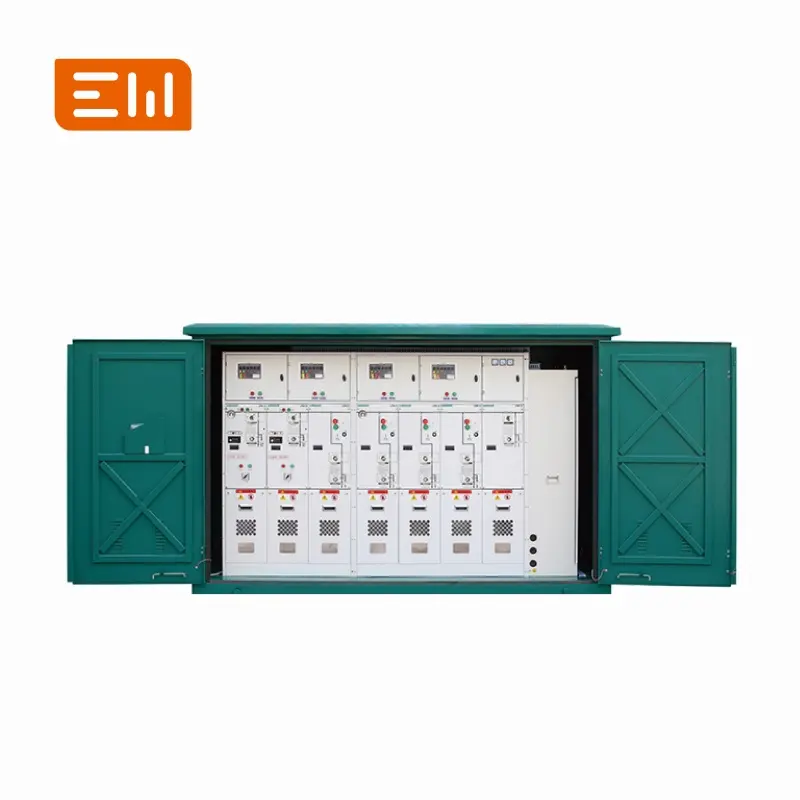
GIS Ring Main Unit vs. Solid Insulated RMU: Key Differences and Selection Tips
When sourcing ring main units, one question shows up early: should you choose a GIS RMU (gas insulated) or a solid insulated RMU? Both aim to deliver compact MV switching with improved reliability, but the best fit depends on regulation, maintenance strategy, and environmental goals.
This article breaks down differences in insulation approach, performance considerations, and a decision checklist you can use in RFQs.
Definitions: What “GIS RMU” and “Solid Insulated RMU” Mean
GIS RMU typically refers to an RMU where primary live parts are enclosed and insulated by gas (commonly SF6, depending on design). This enables a compact footprint and stable dielectric performance.
Solid insulated RMU generally uses solid dielectric materials (such as epoxy-based insulation systems) to encapsulate live parts, reducing reliance on gas insulation and supporting SF6-free approaches in many applications.
Key Differences at a Glance
| Selection Factor | GIS RMU | Solid Insulated RMU |
|---|---|---|
| Footprint | Very compact | Compact (varies by design) |
| Environmental Policy | May require SF6 management plan | Often aligned with SF6 reduction goals |
| Maintenance | Gas monitoring/leak checks may apply | Focus on insulation condition and mechanisms |
| Operating Environment | Good for harsh environments if sealed | Good; verify condensation and partial discharge controls |
| Lifecycle Considerations | Gas handling at end-of-life | Material recycling/handling depends on design |
Footprint vs. Accessibility: What You Gain and What You Trade
Compactness is a strong driver for GIS-type RMUs, especially in kiosk substations and dense urban networks. The tradeoff is that enclosed designs can limit direct access to primary components, so you should ensure the manufacturer provides clear diagnostic guidance and service procedures.
Solid insulated RMUs can also be compact, but the real differentiator is how the design manages insulation stress, moisture, and partial discharge over time. Ask for insulation system details and test evidence aligned with standards.
Safety: Internal Faults, Interlocks, and Earthing
Regardless of insulation medium, safety outcomes depend on:
- Interlocking logic: preventing access to cable compartments before earthing is applied.
- Arc fault containment: how internal faults are managed (pressure relief paths, compartmentalization).
- Clear earthing operations: visible position indicators and robust earthing switches.
Specify internal arc classification requirements if your application demands it, and match it to the installation environment (indoor room vs. outdoor kiosk).
Environmental and Regulatory Reality
Many regions are tightening policies on SF6 usage and reporting. That does not automatically disqualify GIS RMUs, but it changes what you must plan for: inventory tracking, leak checks, and end-of-life recovery.
If your project has strict SF6-free goals, prioritize solid insulated RMUs or alternative insulation approaches that meet your local compliance requirements.
Reliability: Focus on the Interfaces
In MV distribution, many outages are driven by interface issues rather than the switch itself. When comparing RMU types, spend time on:
- Cable termination interface: connector system compatibility, creepage distance, and sealing.
- Compartment sealing: condensation control and cable compartment design.
- Mechanism durability: manual/motor operation endurance and position feedback.
Selection Checklist (Use This in Your RFQ)
To select GIS RMU vs solid insulated RMU, answer these questions:
- Policy: does the project allow SF6, and what reporting is required?
- Space: what is the maximum kiosk/panel footprint and cable bending radius?
- Environment: coastal pollution, flooding risk, temperature extremes, condensation risk?
- Automation: motorization, FPI, SCADA needs, and power supply for controls?
- Fault level: required short-time withstand and internal arc needs?
- Service model: local service capability for gas handling or specialized diagnostics?
Relevant Product Pages for Internal Linking
For RMU category browsing and configuration discussions, link to: Ring Main Units.
For MV switchgear options that go beyond RMU, link to: Switchgear.
Conclusion
GIS RMU and solid insulated RMU can both deliver compact, reliable MV switching. The right choice depends on your environmental policy, service capability, and interface requirements more than any single “best technology” claim.
Provide your voltage class, short-circuit level, and kiosk constraints, and you can narrow the RMU type and configuration quickly.
Image Suggestions
- Image: https://www.enweielectric.com/products/rmu
- ALT: "GIS and solid insulated ring main unit (RMU) options for MV distribution"
- Image: https://www.enweielectric.com/products/switchgear
- ALT: "Medium voltage switchgear solutions for ring networks"
Table of Contents
- GIS Ring Main Unit vs. Solid Insulated RMU: Key Differences and Selection Tips
- Definitions: What “GIS RMU” and “Solid Insulated RMU” Mean
- Key Differences at a Glance
- Footprint vs. Accessibility: What You Gain and What You Trade
- Safety: Internal Faults, Interlocks, and Earthing
- Environmental and Regulatory Reality
- Reliability: Focus on the Interfaces
- Selection Checklist (Use This in Your RFQ)
- Relevant Product Pages for Internal Linking
- Conclusion
- Image Suggestions