 EN
EN
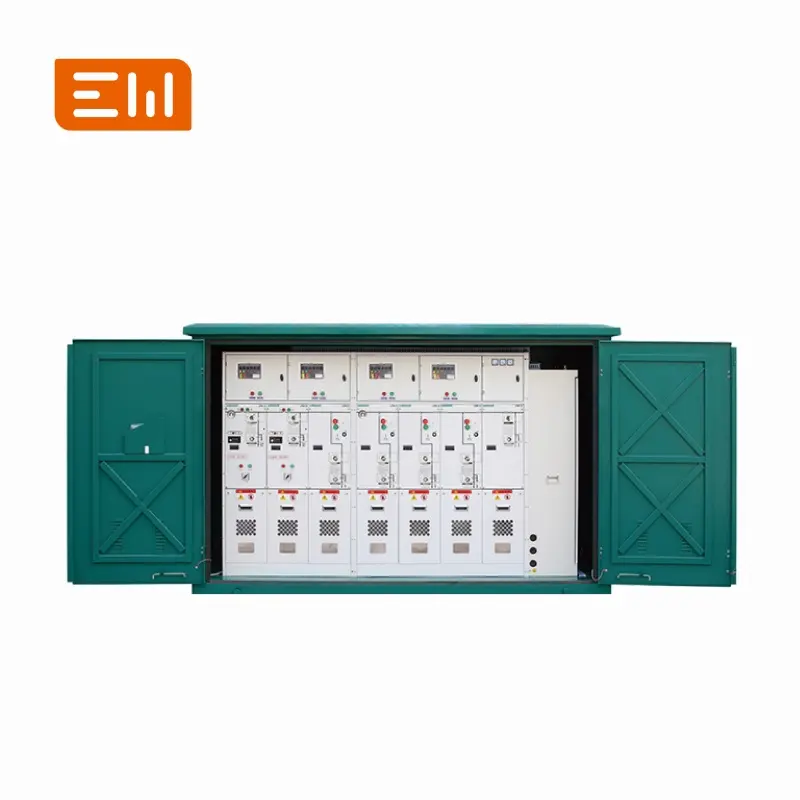
11kV RMU Panel Specifications Explained: Ratings, Protection, and Options
Buying an 11kV RMU is rarely about one number. Two RMUs can both be “11kV” and still be incompatible due to insulation level, short-circuit withstand, cable interfaces, or protection philosophy.
This article explains the practical spec items that engineers and procurement teams should align before issuing an RFQ.
11kV vs 12kV Class: What It Usually Means
Many markets refer to “11kV” networks, while equipment is often standardized in a 12kV class per applicable standards. In practice, you should specify the rated voltage and, more importantly, the insulation level required by your utility or project specification.
Do not rely on the “11kV” label alone. Always confirm the power frequency withstand and lightning impulse withstand values required for your system.
Core Electrical Ratings to Include
- Rated current (busbar and switches): commonly 630A for ring switches, but confirm feeder needs.
- Short-time withstand current: e.g., 16kA/1s, 20kA/1s, 25kA/1s depending on fault level.
- Peak withstand current: required for dynamic forces during faults.
- Insulation level: power frequency and impulse withstand values.
If you are integrating an RMU into a compact substation, coordinate the RMU ratings with the transformer impedance and upstream protection to avoid nuisance trips or under-protection.
Transformer Feeder Protection Options
For 11kV distribution transformers, the transformer feeder is typically one of these types:
- LBS + fuse: cost-effective, widely used; specify fuse type and striker mechanism requirements.
- Vacuum circuit breaker feeder: supports relay protection and automation; specify relay functions and CT requirements.
- Load break switch + relay (less common): used in certain designs; clarify tripping mechanism.
Your choice should follow your protection philosophy, transformer size, and whether remote control/automation is required.
Cable Interface and Termination Details
Cable terminations are frequent sources of installation issues. In your RMU specification, define:
- Cable size range: conductor cross-section and insulation type.
- Connector/bushing standard: elbow connectors, separable connectors, or other interface systems.
- Termination direction: front/rear/side cable entry, bending radius constraints.
- Test points and capacitive voltage indication: if required for safety procedures.
Mechanical and Safety Requirements
For safe operations and maintenance, include:
- Earthing switch ratings: short-circuit making capacity and interlocking.
- Interlocks: to prevent unsafe switching sequences or access when live.
- Padlocking: requirements for utility operating procedures.
- IP rating: especially for outdoor kiosks or high-humidity environments.
Optional Add-Ons for Modern Distribution
If your 11kV network targets faster fault location and restoration, consider specifying:
- Fault passage indicators (FPI): with local indication and optional remote communication.
- Motorized operation: for ring switches and breakers.
- SCADA-ready IO: position feedback, alarms, and control power requirements.
- Metering modules: CT/VT sections if billing or measurement is needed at the RMU.
Internal Links for Product Discovery
For product category context and configuration discussions, link to the RMU hub: Ring Main Units.
For broader MV distribution gear (KYN/HXGN and similar), link to: Switchgear.
Conclusion
An “11kV RMU” becomes a correct procurement item only after you lock down insulation level, fault level (short-time withstand), cable interfaces, and protection philosophy. Put these items into your RFQ early and you will reduce redesign loops and onsite surprises.
Image Suggestions
- Image: https://www.enweielectric.com/products/rmu
- ALT: "11kV ring main unit (RMU) panel for distribution transformer feeder"
- Image: https://www.enweielectric.com/products/substations
- ALT: "Compact substation package using 11kV RMU"
Table of Contents
- 11kV RMU Panel Specifications Explained: Ratings, Protection, and Options
- 11kV vs 12kV Class: What It Usually Means
- Core Electrical Ratings to Include
- Transformer Feeder Protection Options
- Cable Interface and Termination Details
- Mechanical and Safety Requirements
- Optional Add-Ons for Modern Distribution
- Internal Links for Product Discovery
- Conclusion
- Image Suggestions