 EN
EN
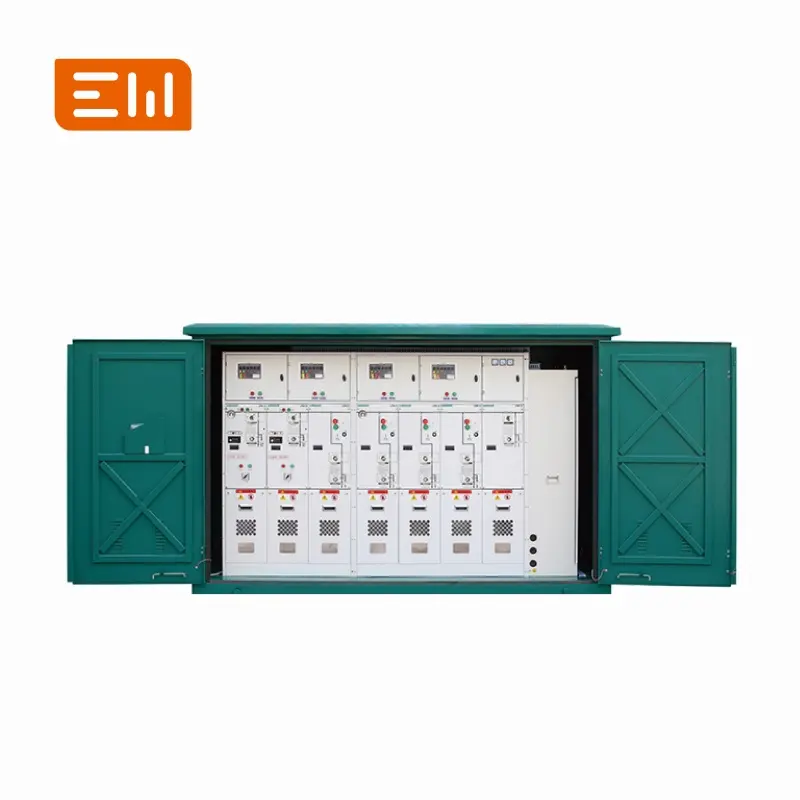
12kV RMU: Standard Configurations (C-C-C, C-C-V) and Common Applications
When engineers say a 12kV RMU is “C-C-C” or “C-C-V”, they are using shorthand for the functional units inside the ring main unit. This shorthand is useful, but it can also hide important details like protection method, automation readiness, and cable interface expectations.
This guide explains common RMU configuration codes, what they typically mean in practice, and how to turn the shorthand into a complete procurement specification.
Why 12kV Is Common for “11kV” Networks
Many distribution networks are referred to as 11kV, but equipment is often standardized in a 12kV class. The practical requirement is not the label, but the rated voltage and insulation level (power frequency withstand and lightning impulse withstand) required by your standard and utility practice.
What the Letters Usually Mean (C, V, and More)
While definitions vary by region and manufacturer, these codes are commonly used:
- C: a load break switch (LBS) functional unit (ring switch way).
- V: a vacuum circuit breaker functional unit (breaker way) with relay capability.
- F: a fused switch transformer feeder (LBS + fuse) in many naming conventions.
Always ask the supplier to confirm the definition for the project, especially if the code is used in a tender document.
Configuration Example: C-C-C
A typical C-C-C RMU means three LBS ways. This is common when the RMU is used purely for ring sectionalizing and does not include a transformer feeder within that unit.
Common applications:
- Ring network switching nodes in urban cable distribution
- Branching points where all feeders are ring ways
- Networks where transformer feeders are handled elsewhere
Spec items to confirm: rated current of ring switches, short-time withstand, cable interfaces, earthing switch arrangement, and whether motorization/FPI is included.
Configuration Example: C-C-V
A typical C-C-V RMU means two ring switches (C, C) and one circuit breaker feeder (V). This is common when you need a protected feeder or transformer feeder with relay functions.
Common applications:
- Critical transformer feeder protection with relay coordination
- Industrial feeders requiring selectivity and remote tripping
- Automation-ready distribution schemes
Spec items to confirm: relay functions, CT ratio/class/burden, trip/control voltage, IO list for SCADA, and breaker interrupting duty.
What You Still Need Beyond the Shorthand
Even if you know the “C-C-V” style code, you still must specify:
- Voltage class and insulation level
- Rated current (busbar and each functional unit)
- Fault duty (short-time withstand and peak)
- Cable termination interface (bushing/connector system, test points)
- Interlocks and safety (earthing switch, access sequence)
- Environment and enclosure (indoor/outdoor, IP rating, condensation control)
- Automation scope (motorized, FPI, RTU/SCADA)
Procurement Tip: Attach a Single-Line Diagram
Configuration codes are a good start, but a single-line diagram eliminates many assumptions. Include feeder naming, ring direction, transformer size (if applicable), and any interlocking or operating rules.
Internal Links
RMU category page: Ring Main Units.
For broader MV panels and solutions: Switchgear.
Conclusion
C-C-C and C-C-V are helpful RMU configuration shorthands, but they are not complete specifications. Use the code to describe functional units, then lock down insulation level, fault duty, interfaces, and automation requirements to ensure the delivered RMU matches your network and operating procedures.
Image Suggestions
- Image: https://www.enweielectric.com/products/rmu
- ALT: "12kV RMU standard configurations for ring network distribution"
- Image: https://www.enweielectric.com/products/substations
- ALT: "Compact substation using 12kV RMU for MV distribution"
Table of Contents
- 12kV RMU: Standard Configurations (C-C-C, C-C-V) and Common Applications
- Why 12kV Is Common for “11kV” Networks
- What the Letters Usually Mean (C, V, and More)
- Configuration Example: C-C-C
- Configuration Example: C-C-V
- What You Still Need Beyond the Shorthand
- Procurement Tip: Attach a Single-Line Diagram
- Internal Links
- Conclusion
- Image Suggestions