
 EN
EN
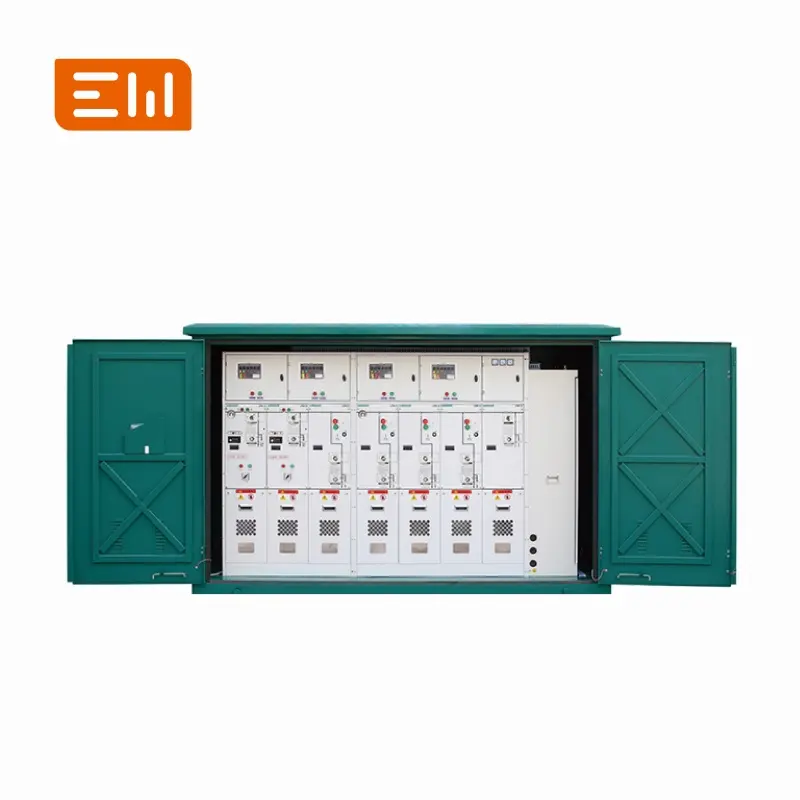
RMU Tender Checklist: A Practical Specification Template for Utilities and EPCs
RMU tenders often fail for one simple reason: too many assumptions. Suppliers respond with different insulation levels, cable interfaces, protection scopes, and “standard” options, and evaluation becomes slow and error-prone.
This checklist is a practical template you can paste into your RFQ to make RMU offers comparable and procurement-ready.
A) System Information (Provide This Upfront)
- Network nominal voltage: e.g., 11kV / 24kV / 36kV class.
- Frequency: 50Hz or 60Hz.
- System grounding method: solid, resistance, isolated, compensated.
- Maximum short-circuit level at site: kA and duration (e.g., 20kA/1s).
- Installation: indoor room vs outdoor kiosk; altitude; temperature range; pollution class.
B) Functional Configuration (Single-Line Diagram)
Attach a single-line diagram. Also state the required functional units:
- Ring ways: quantity and whether they are LBS ways.
- Transformer feeder: fused switch or circuit breaker feeder (and quantity).
- Additional feeders: metering feeder, outgoing feeder, bus coupler (if needed).
C) Electrical Ratings
- Rated voltage and insulation level: power frequency withstand and impulse withstand.
- Rated current: busbar and each functional unit.
- Short-time withstand current: with duration.
- Peak withstand current: if required.
- Earthing switch making capacity: if specified by utility standards.
D) Protection and Control Scope
Define which protection approach you need:
- LBS + fuse: specify fuse coordination approach and indication requirements.
- CB + relay: specify relay functions (OC/EF, directional if required), trip circuit, and control voltage.
- CT/VT: ratios, classes, burdens, and mounting arrangement if metering/protection is required.
E) Cable Interfaces and Compartment Requirements
- Cable type and size: conductor cross-section and insulation type.
- Interface standard: separable connectors/bushings, test points, voltage indication.
- Cable entry: bottom/top/side; minimum bending radius constraints.
- Earthing: screen earthing arrangement and earth bar requirements.
F) Safety Requirements
- Interlocks: earthing/access interlocks, key interlocks, padlocking points.
- Internal arc classification: if required by the project.
- IP rating: enclosure and cable compartment requirements.
G) Automation and Monitoring (If Required)
- Motorization: which switches/breakers are motorized.
- FPI: local indication and remote comms requirements.
- SCADA IO list: status, alarms, control commands, and protocol constraints.
- Auxiliary supply: control power voltage, battery/UPS if required.
H) FAT and Documentation
Specify acceptance requirements such as:
- Routine tests: dielectric tests, functional tests, interlock verification.
- Mechanical endurance: if required by the procurement spec.
- Documentation: drawings, wiring diagrams, test reports, operation manuals.
- Spare parts: recommended spares list and quantities.
Internal Links
RMU category page: Ring Main Units.
Related MV panels: Switchgear.
Conclusion
A strong RMU tender is specific about insulation level, fault duty, interfaces, and protection scope. If you provide the system data and the single-line diagram, you will receive more comparable bids and avoid late-stage changes that delay delivery.
Enwei Electric can align RMU configuration options to your tender requirements when the checklist items above are clear and complete.
Image Suggestions
- Image: https://www.enweielectric.com/products/rmu
- ALT: "RMU procurement and tender checklist for MV distribution projects"
- Image: https://www.enweielectric.com/contact-us
- ALT: "Contact Enwei Electric for RMU specification support"
Table of Contents
- RMU Tender Checklist: A Practical Specification Template for Utilities and EPCs
- A) System Information (Provide This Upfront)
- B) Functional Configuration (Single-Line Diagram)
- C) Electrical Ratings
- D) Protection and Control Scope
- E) Cable Interfaces and Compartment Requirements
- F) Safety Requirements
- G) Automation and Monitoring (If Required)
- H) FAT and Documentation
- Internal Links
- Conclusion
- Image Suggestions