 EN
EN
Cable Distribution Box Ring Main Unit: Use Cases, Benefits, and Limitations
A cable distribution box RMU is often used as a compact switching node in underground medium voltage cable networks. The goal is practical: provide a safe, accessible point to sectionalize cables, isolate faults, and reconfigure feeders without building a full indoor switchgear room.
This article explains the typical role of a cable distribution box RMU, where it fits, and what to watch for during specification.
What Is a Cable Distribution Box RMU?
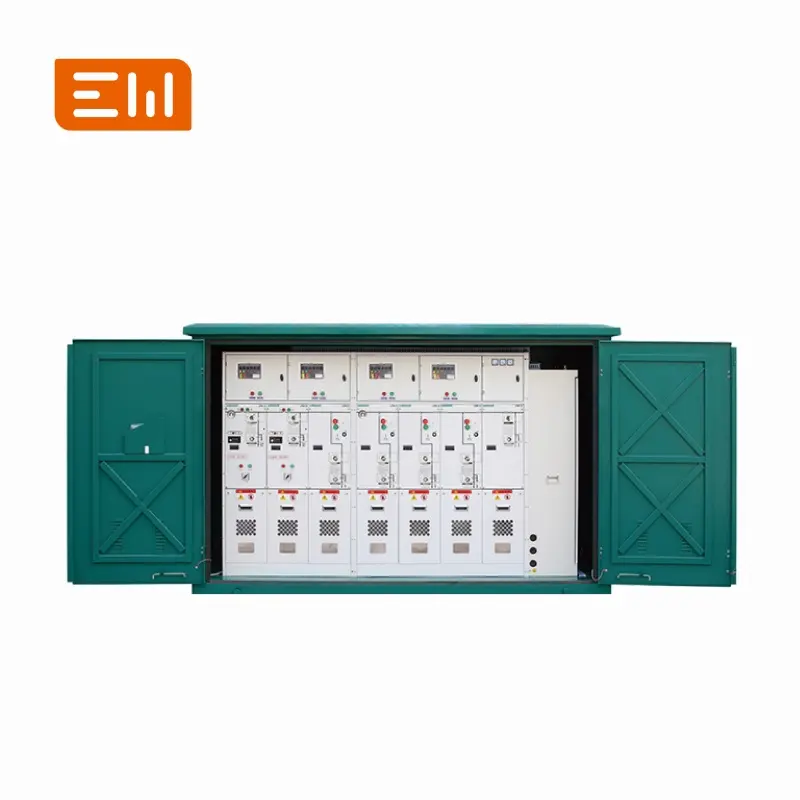
In many distribution systems, “cable distribution box” refers to an outdoor kiosk-style enclosure that houses an RMU. It provides switching functions (ring switches, transformer feeder, earthing) and cable termination compartments in a weather-protected form.
Depending on the design, the unit can be installed along roadways, inside industrial parks, near substations, or at branching points in the cable network.
Common Use Cases
- Urban distribution rings: multiple kiosks enabling ring sectionalizing and fast restoration.
- Industrial parks: branching feeders to multiple facilities while keeping footprint small.
- Renewable collector networks: switching points for wind/solar collector circuits.
- Compact substations: a kiosk RMU feeding distribution transformers.
Benefits
- Space efficiency: no dedicated MV room required for many installations.
- Reduced outage time: helps isolate faults and restore service from the healthy side of a ring.
- Operational consistency: standardized switching procedures and interlocks.
- Flexible installation: can be placed close to loads to reduce MV cable runs.
Limitations and Practical Constraints
Cable distribution box RMUs are not a universal replacement for indoor switchgear. Limitations can include:
- Access constraints: technicians need clearance for cable bending radius and safe operations.
- Environment exposure: condensation, flooding, salt fog, and vandalism risks must be addressed.
- Protection complexity: advanced protection schemes may be better served by metal-clad switchgear in MV rooms.
- Heat and ventilation: for kiosks in hot climates, internal temperature rise can drive design requirements.
Key Specification Items
To source the right cable distribution box RMU, specify:
- Voltage class and insulation level (withstand and impulse ratings).
- Rated current and fault duty (short-time withstand, peak).
- Ways and functions (ring in/out, transformer feeder type, extra feeders).
- Cable interface (connector/bushing standard, test points, voltage indication).
- Kiosk enclosure requirements (IP rating, corrosion protection, locking, ventilation).
- Safety and interlocks (earthing switch, access interlocks, padlocking points).
- Automation (motorization, fault indicators, SCADA IO if required).
Installation Tips That Prevent Field Rework
Before finalizing the purchase, confirm:
- Foundation and cable trench layout fits the kiosk footprint and cable entry points.
- Drainage and flood mitigation are adequate for the site.
- Minimum clearance for safe door opening and switching operations.
- Earthing system integration (kiosk earth bar, cable screens, and local earthing grid).
Internal Links
For RMU options and configurations: Ring Main Units.
If your project needs broader MV panel solutions: Switchgear.
Conclusion
Cable distribution box RMUs are a practical answer for MV cable networks that need reliable sectionalizing without building a full switchgear room. The best results come from aligning cable interfaces, kiosk enclosure requirements, and site conditions early in the specification.
Image Suggestions
- Image: https://www.enweielectric.com/products/rmu
- ALT: "Cable distribution box RMU used for MV underground cable networks"
- Image: https://www.enweielectric.com/products/substations
- ALT: "Outdoor compact substation with kiosk RMU"