 EN
EN
Ring Network Design Basics: Why RMU Improves Reliability
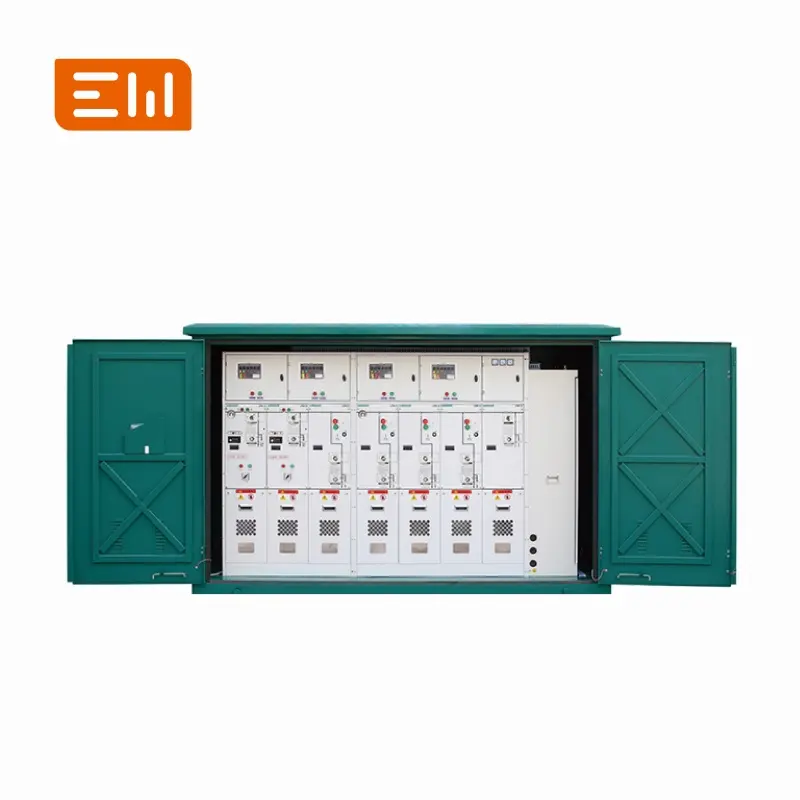
Medium voltage distribution can be built as radial feeders or ring networks. In many dense and high-reliability applications, a ring network is preferred because it allows supply restoration from an alternate direction after isolating a faulted section. The RMU is the switching node that makes this practical in compact kiosks.
This article explains the basics of ring network design and why RMUs are so widely used.
Radial vs Ring Distribution (Conceptual)
Radial: power flows from one source direction to the loads. A fault on the feeder usually interrupts all downstream loads until the fault is cleared.
Ring: loads can be fed from two directions. If a fault occurs, switching points isolate the faulty section and restore supply from the other side for most loads.
How RMUs Enable Sectionalizing
RMUs provide switching points along the ring. During a cable fault:
- operators (or automation) identify the faulted segment
- adjacent RMUs open the ring switches to isolate that segment
- the rest of the ring is re-energized from the alternate direction
This process reduces outage scope and restoration time.
Typical Ring Operating Modes
Ring networks are not always operated as fully closed rings. Common modes include:
- Normally open point (NOP): the ring is open at one point to control fault levels and protection coordination.
- Normally closed operation: used in some designs with advanced protection and automation.
The chosen operating mode affects protection settings, fault current levels, and the required automation sophistication.
Protection and Fault Location Considerations
Ring networks require coordination. Consider:
- fault level variation: faults can be fed from multiple directions depending on switching state
- earth fault behavior: depends on system grounding method
- fault location: FPIs and SCADA reduce time to find cable faults
For critical networks, feeder automation can significantly reduce outage duration.
Where Ring Networks Are Common
- urban distribution with underground cables
- industrial parks with multiple customer connections
- renewable collector networks (wind/solar)
- campuses and large commercial developments
Design Checklist (High Level)
- Define: number of switching points and RMU locations
- Choose: operating mode (NOP vs closed ring)
- Specify: RMU fault duty and insulation level
- Plan: fault indication and automation strategy
- Coordinate: protection settings with switching plan
Internal Links
RMU category page: Ring Main Units.
MV switchgear solutions: Switchgear.
Conclusion
Ring networks improve reliability by allowing fault isolation and restoration from alternate directions. RMUs are the compact switching nodes that make ring distribution practical in real sites. The best ring design aligns switching procedures, protection coordination, and automation level with your outage tolerance and operational capability.
Image Suggestions
- Image: https://www.enweielectric.com/products/rmu
- ALT: "RMU used as switching node in a medium voltage ring network"
- Image: https://www.enweielectric.com/products/substations
- ALT: "Distribution substations connected by ring main unit networks"
Table of Contents
- Ring Network Design Basics: Why RMU Improves Reliability
- Radial vs Ring Distribution (Conceptual)
- How RMUs Enable Sectionalizing
- Typical Ring Operating Modes
- Protection and Fault Location Considerations
- Where Ring Networks Are Common
- Design Checklist (High Level)
- Internal Links
- Conclusion
- Image Suggestions